Plumbing technology has evolved significantly over recent years, offering homeowners more efficient, durable, and less invasive solutions for underground pipe repairs. Among these innovations, cured-in-place pipe (CIPP) relining has emerged as the premier trenchless alternative to traditional excavation. Before agreeing to invasive plumbing work, understanding how pipe relining works—and why it outperforms traditional dig-and-replace methods—can help homeowners make informed, cost-effective decisions for their properties.
What Is Pipe Relining and How Does It Work?
The Trenchless Relining Process
Pipe relining works by creating a brand-new, seamless pipe inside the existing damaged host pipe. First, plumbing technicians use high-resolution sewer cameras to inspect the line, locate blockages, and identify structural cracks or root intrusion.
Next, the line is thoroughly cleaned using high-pressure hydro-jetting. A flexible, felt-or-fiberglass sleeve saturated with an epoxy resin matrix is then pulled or inverted into the host pipe, inflated with air or water, and cured using heat, steam, or UV light to form a smooth, jointless structural core.
High-Performance Materials
Advanced epoxy, polyurethane, and silicate resin systems are engineered to withstand extreme soil pressure, temperature variations, and chemical exposure. These non-porous liners create a joint-free interior surface that eliminates future root intrusion, improves flow capacity, and resists corrosion far better than original clay, iron, or concrete pipes.
Minimal Surface Disruption
Unlike traditional plumbing repairs that require digging massive trenches across lawns, driveways, or building foundations, trenchless pipe relining accesses the damaged sewer line through existing cleanouts or small access points.
Pipe Relining vs. Traditional Excavation: Key Differences
Property Impact and Disruption
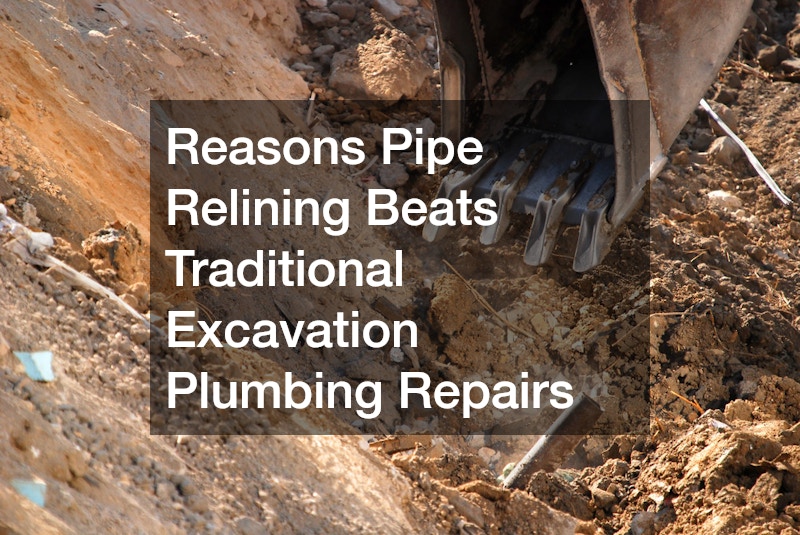
Traditional excavation relies on heavy machinery to dig open trenches along the entire length of the damaged pipe. This process destroys manicured lawns, brick pavers, concrete driveways, and mature landscaping. In contrast, trenchless pipe relining operates entirely underground through existing access points, keeping surface structures intact and preserving curb appeal.
Project Duration and Convenience
Excavation projects frequently span several days to a full week due to extensive digging, pipe replacement, backfilling, and surface reconstruction. Pipe relining eliminates these labor-intensive steps, allowing most residential projects to be completed in just 24 to 48 hours with minimal disruption to daily household routines.
Long-Term Value and Total Cost
While traditional excavation may initially appear competitively priced for labor, the hidden costs of repairing destroyed driveways, sidewalks, and landscaping significantly inflate the final bill. Relining avoids post-repair reconstruction expenses while providing a seamless, root-proof pipe system designed to last 50 years or more.
Key Advantages of Trenchless Pipe Relining
1. Minimal Property Disruption and Surface Protection
The primary advantage of trenchless pipe relining is its ability to preserve surrounding surface structures. Traditional pipe replacement requires heavy excavators to tear up residential land and hardscapes. Pipe relining leaves your landscape untouched, preserving overall property value and eliminating the stress of post-plumbing property reconstruction.
2. Superior Cost-Effectiveness
While the material technology for CIPP relining is advanced, the total project cost is often significantly lower than traditional excavation. Excavation requires heavy machinery rentals, larger labor crews, extended working hours, and thousands of dollars in landscape, asphalt, or concrete restoration. Relining eliminates those auxiliary expenses, delivering exceptional long-term financial value.
3. Long-Term Performance and Structural Integrity
Epoxy resin liners are built to endure heavy environmental pressures. The resulting seamless inner wall effectively seals existing cracks, prevents leaks, and creates a smooth surface with lower friction, which increases wastewater flow velocity. Crucially, because the new pipe is completely seamless, tree roots can no longer penetrate pipe joints—the single leading cause of residential sewer line blockages.
Project Timelines and Environmental Safety
Rapid Project Turnaround
Traditional sewer excavation projects leave homes with limited plumbing access and disrupted driveways for extended periods. In contrast, the insertion and curing process for trenchless liners takes only a fraction of the time, restoring full functional plumbing service rapidly and cleanly.
Environmental and Safety Compliance
Modern epoxy resins and CIPP materials meet strict industry safety standards, including non-toxic wastewater protocols. Eliminating open trenches also reduces jobsite safety hazards, soil erosion, heavy machinery emissions, and neighborhood disturbances.
Trenchless pipe relining represents a major leap forward in residential and commercial plumbing repairs in Acworth, GA and beyond. By combining advanced epoxy materials with non-invasive installation techniques, relining delivers a seamless, root-proof pipe system that matches or exceeds the lifespan of brand-new piping. For property owners seeking a long-lasting, cost-effective solution that protects their lawns, hardscapes, and overall property value, pipe relining is clearly the superior choice over traditional excavation.